
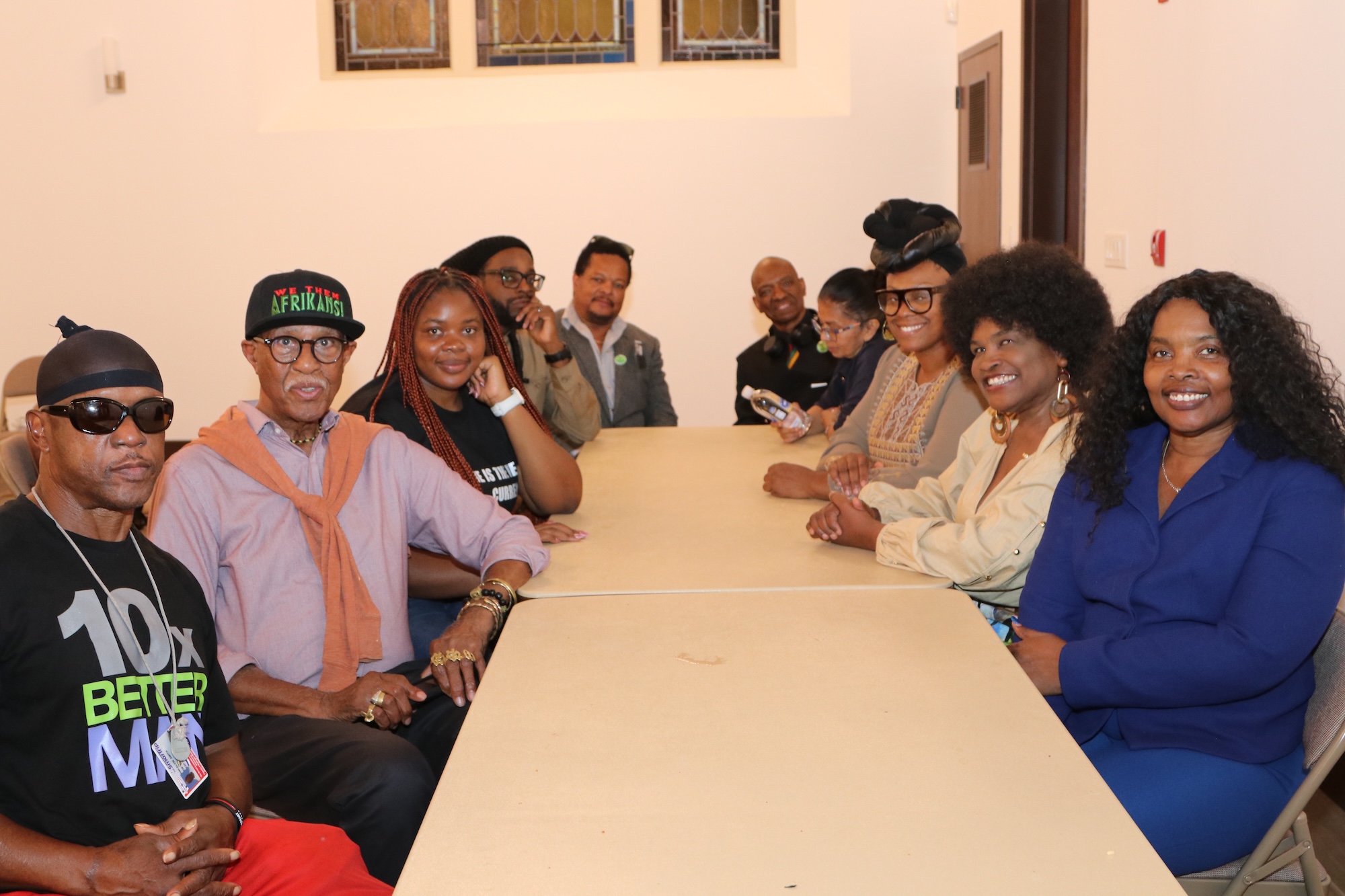
On September 19th, the Economic, Social and Cultural Council (ECOSOCC) of the African Union convened a Diaspora and Civil Society Dialogue on Interfaith Reparatory Justice and Healing in New York, building on the momentum of the preceding "Journey to 20 Seats" engagement.
The dialogue advanced the conversation from diaspora representation and participation to the substantive dimensions of repair, responsibility, restitution, institutional accountability and healing. The event brought together representatives from faith institutions, universities, civil society organisations, governments, schools, descendant communities, reparations movements and African Diaspora organisations.
Discussions were situated within the framework of the African Union's wider reparative justice agenda and the emerging architecture for structured diaspora participation, including the operationalisation of the 20 ECOSOCC diaspora seats in its General Assembly.
Taking place during the Second International Decade for People of African Descent (2025–2034), under the theme "Recognition, Justice and Development," the dialogue addressed justice, accountability, representation, institutional reform, restitution, inclusion and the sustained participation of people of African descent.
ECOSOCC Head of Secretariat, Ambassador William Carew, underscored that the diaspora is "part and parcel of the African family.""For me, this is not only about having conversations. It is about meaningful engagement, active citizenship and shared responsibility," Ambassador Carew stated.
"This is why the Journey to 20 Seats is so important. We are working to operationalise the participation of diaspora civil society organisations within ECOSOCC and create a more structured pathway for diaspora voices to be represented within the African Union."
ECOSOCC Presiding Officer, Mr Louis Cheick Sissoko, highlighted the critical role of faith communities, civil society and the diaspora in confronting difficult truths and creating pathways towards reconciliation. Drawing on the experience of South Africa's Truth and Reconciliation Commission, he noted that reparatory justice cannot be left to institutions alone or reduced to a single form of compensation.
Panel on Interfaith Reparatory Justice and Healing, From Memory and Recognition to Repair
The panel examined the role of institutions in transitioning from acknowledgement and historical reflection towards meaningful and sustained action.
ECOSOCC Head of Programmes, Mr Kyeretwie Osei, emphasised the imperative for Africans to define the reparations agenda on their own terms.
"Because if we don't conceptualise it for ourselves, it becomes easier for those opposed to the agenda to distort exactly what we are proposing," Mr Osei stated.
He further stressed that acknowledgement is foundational to any process of repair: "You cannot have repair when there is no acknowledgement."
Ms Aysha Ames, Director of Legal Writing at Fordham University School of Law, brought a personal dimension to the discussion, sharing her research into her family history and the intersection of faith, enslavement and identity. She challenged participants to interrogate how institutions were built, who benefited from the wealth generated through enslaved labour, and how those histories continue to shape institutional structures today.
Dr Chevy Eugene, Assistant Professor of Black and African Diaspora Studies at Dalhousie University, emphasised that reparations extend beyond financial compensation. He called for deeper engagement with historical records, including the roles of churches, governments, investors and beneficiaries, and for affected individuals and communities to be written back into the historical record.
The dialogue also highlighted complementary forms of repair, including official apologies, access to archives, public dialogue, the rebuilding of damaged relationships, community healing and greater institutional accountability.
Participants raised a number of critical questions: What should meaningful reparations look like beyond compensation? Who should determine the forms of repair? What responsibility do religious and other institutions carry today? And how can archives and historical evidence be made accessible to affected communities?
Closing Reflections
Reverend Nathanael L. B. Saint-Pierre of St. James' Episcopal Church, Fordham, expressed his hope that the engagement would be the first of many sustained conversations on reparatory justice and healing. Reflecting on Haiti's history, he
emphasised the importance of communities exercising agency in determining their own path towards transformation.
Ms Kim Poole echoed the call for collective agency, highlighting prayer, accountability and solidarity, and calling on the Black Church and people of different faith traditions to stand together in support of justice, healing, reparations and African unity.
In his closing remarks, Mr Sissoko called on faith communities and institutions to confront their own histories and to critically examine teachings and interpretations that have been used to justify colonialism, racial hierarchy and the devaluation of African peoples.