
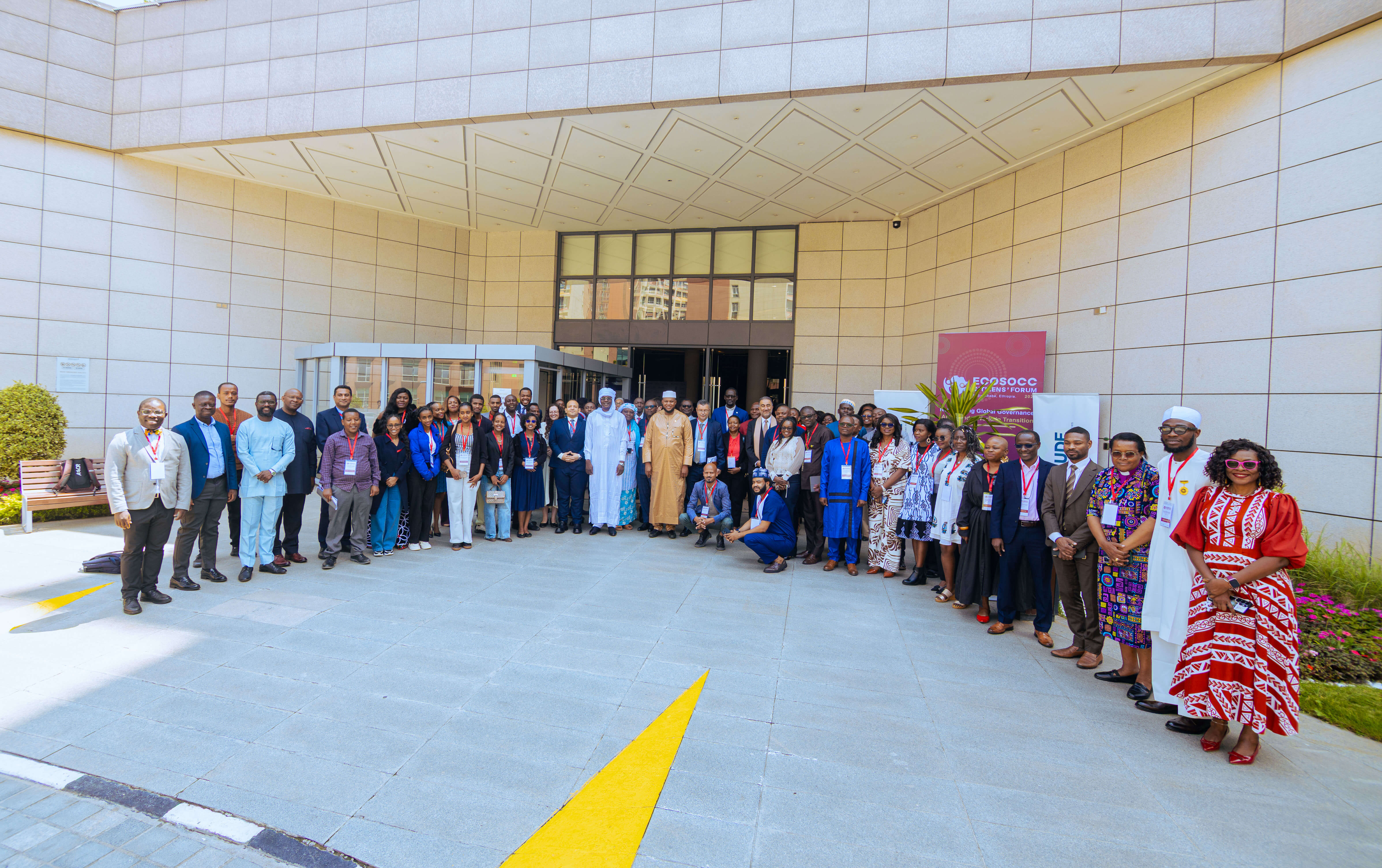
The recently concluded 2026 African Union Economic, Social and Cultural Council (AU-ECOSOCC) Citizens’ Forum, held from 24 to 25 July 2026 in Addis Ababa, provided an important platform for presenting progress on the ECOSOCC–INCLUDE National Perception Studies and Continental Survey. It also positioned the research within wider discussions on Africa’s place in a rapidly changing global order.
The Citizens’ Forum is ECOSOCC’s annual flagship event for structured engagement with citizens and civil society organisations. It brings together more than 300 participants from across the continent and the diaspora, including representatives of African Union institutions, civil society, development partners, academia, the private sector, youth and women’s organisations, professional associations and thematic experts, to reflect on continental priorities and generate practical policy recommendations.
ECOSOCC an advisory and consultative organ of the African Union, facilitates the active and meaningful participation of African civil society in the policies, programmes and decision-making processes of the Union. It serves as a bridge between the African Union, citizens, civil society organisations and the diaspora, providing structured channels through which their perspectives and recommendations can inform continental governance and development priorities.
The 2026 Forum was held under the theme, “Reimagining Global Governance: Africa and a World in Transition.” It took place against a backdrop of geopolitical tensions, armed conflicts, climate shocks, sovereign debt distress, technological disruption, widening inequality and declining confidence in multilateral institutions. Over the two days, participants examined global governance and United Nations Security Council reform, the global financial architecture, climate action and a just energy transition, artificial intelligence and digital governance, and reparative justice for Africans and people of African descent.
The Forum was officially opened by H.E. Ambassador Fathallah Sijilmassi, Director General of the African Union Commission, who represented H.E. Mahmoud Ali Youssouf, Chairperson of the African Union Commission, and delivered the opening address on his behalf. The opening session also featured remarks from Mr. Louis Cheick Sissoko, Presiding Officer of ECOSOCC, H.E. Ambassador William Carew, Head of the ECOSOCC Secretariat; Ms. Ruth Ogbewekon of the Pan African Lawyers Union and Dr. Jide Okeke of the United Nations Development Programme Regional Service Centre for Africa. Their interventions underscored the African Union’s commitment to citizen participation, institutional reform and African agency.
Within this broader context, the Forum provided an opportunity to present the ongoing ECOSOCC–INCLUDE Perception Study. During the session, Ms. Victoria Manya, Knowledge Manager at the INCLUDE Knowledge Platform, and Dr. George Mukundi, Team Leader of the study within the ECOSOCC ecosystem, took participants through the study’s origins, purpose, methodology, implementation progress and expected outcomes.
They explained that the study is being implemented with the support of ECOSOCC National Chapters and national-level civil society actors in Egypt, Kenya, Mozambique, Nigeria and Senegal. ECOSOCC National Chapters are country-level platforms that connect the African Union with citizens and civil society organisations. They support the implementation and monitoring of ECOSOCC activities, promote awareness of African Union programmes and mobilise civil society participation in advancing the AU’s Agenda 2063.
The study emerged from a Memorandum of Understanding signed between ECOSOCC and the INCLUDE Knowledge Platform in February 2026, establishing a framework for joint research, knowledge exchange, policy dialogue and strategic engagement on Africa’s development priorities.
Supported by the Dutch Ministry of Foreign Affairs through the INCLUDE Knowledge Platform, the study forms part of a broader review of the Netherland’s development-cooperation and funding model. It seeks to understand how African stakeholders perceive the Netherlands as its primary focus, with the European Union serving as a secondary frame of analysis.
The research examines development cooperation, financing approaches, partnership practices, stakeholder engagement and the wider Africa–Europe cooperation architecture. It responds to a persistent concern that development policies and funding models are often designed without sufficient understanding of how they are experienced by African institutions, civil society organisations and communities.
Ms. Manya and Dr. Mukundi emphasised that perceptions matter because they influence trust, legitimacy, cooperation and the effectiveness of development interventions. Historical experiences, unequal power relations, externally determined priorities, funding conditionalities, short project cycles and limited African participation in defining development challenges all shape how partnerships are understood.
The study is being implemented through country-level research processes, supported by a continental survey and synthesis. Country research teams are undertaking stakeholder mapping, interviews, focus group discussions, surveys and documentary analysis, while engaging government institutions, civil society organisations, development partners, academia, private-sector actors, the media and other relevant stakeholders.
Participants were informed that the study had moved into the implementation phase, with research teams mobilising stakeholders, conducting interviews and focus group discussions, administering surveys and collecting evidence on how development partnerships are experienced at national and institutional levels. The study will also examine public and social-media perceptions and present its findings through country reports, policy briefs, validation processes, a continental synthesis report and a digital dashboard.
The session emphasised that the quality of development cooperation cannot be measured only by the amount of funding provided. Trust, participation, dignity, local ownership, institutional equality and long-term impact are equally important. Participants therefore called for a gradual shift from traditional aid-centred relationships towards investment, equitable institutional partnerships and cooperation grounded in African-defined priorities.
Ms. Manya highlighted the importance of collecting perspectives from different levels of society, including governments, civil society, communities, the media, the private sector and digital platforms. Dr. Mukundi linked the study to ECOSOCC’s wider mandate of strengthening citizen participation and ensuring that African perspectives inform both continental policy and international development cooperation.
Presenting the study at the Citizens’ Forum reinforced the broader message that Africa should not remain a passive recipient of externally designed policies, technologies and financing models. African institutions and citizens must participate directly in defining development challenges, shaping responses, monitoring commitments and evaluating the effectiveness of international partnerships.
The study is expected to produce country reports, policy briefs, a perception dashboard, a validation presentations and a continental synthesis report. These outputs will support evidence-based policy dialogue and contribute to more responsive, equitable and mutually beneficial relationships between Africa, the Netherlands and the European Union.
By showcasing the Perception Study at the Citizens’ Forum, ECOSOCC and INCLUDE demonstrated the importance of grounding development cooperation in evidence, lived experience and African voices.