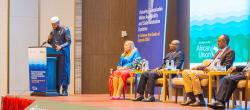

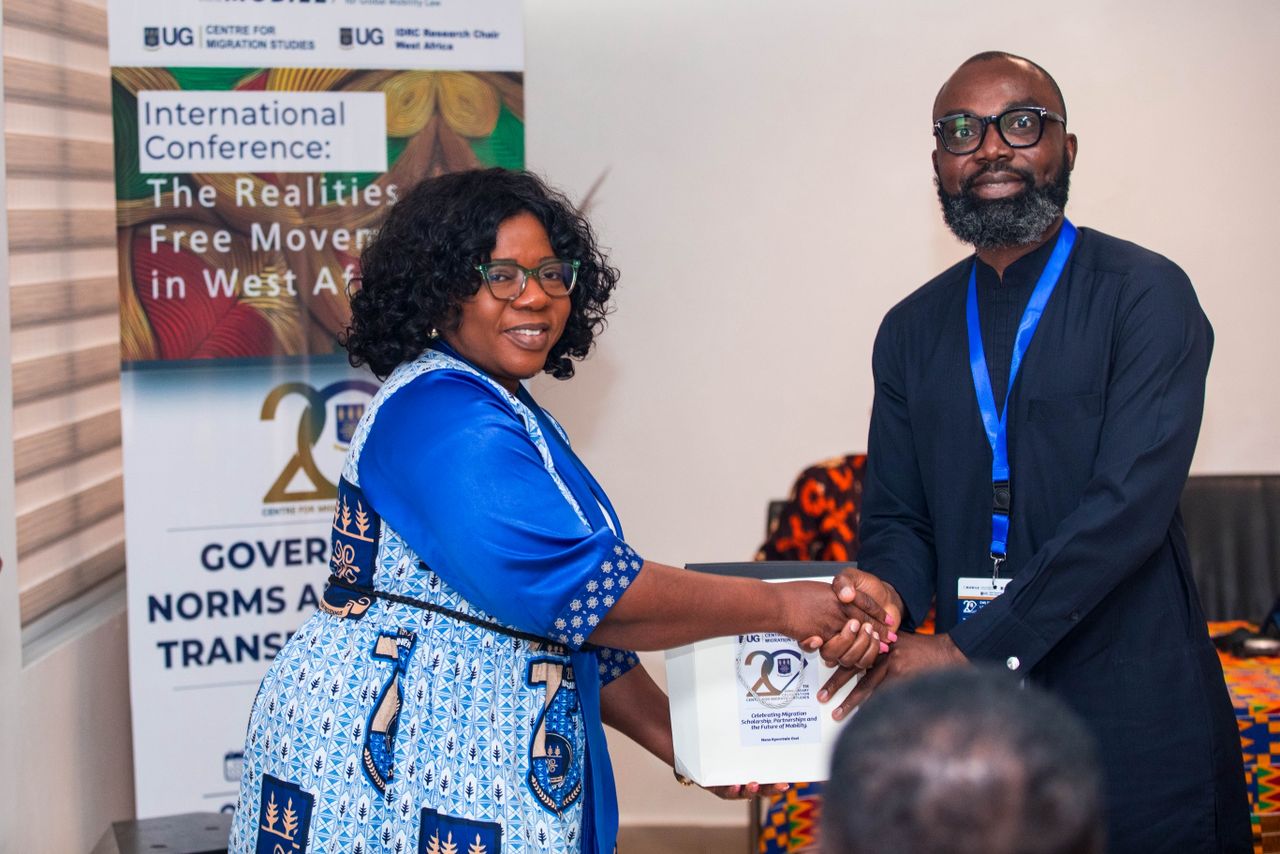
ECOSOCC took part in a high-level dialogue on, The Realities of Free Movement in West Africa, from 27 to 29 January 2026 at the Centre for Migration Studies, University of Ghana. The event marked the Centre’s 20th anniversary and brought together policymakers, academics, and practitioners to discuss governance, norms, and social transformation influencing mobility in the sub-region.
The dialogue was chaired by Professor Joseph Mensah and brought together a diverse group of experts and practitioners, including Kyeretwie Akwasi Osei, Head of Programmes, ECOSOCC, Paa Kwesi Hagan, Managing Partner at Globetrotters Legal Africa (Ghana); Tiga Alain Ouedraogo, IDRC Research Chair at Joseph Ki-Zerbo University (Burkina Faso); Nauja Kleist, Senior Researcher at the Danish Institute for International Studies; and Michel Debruyne, General Coordinator of the Opportunities Project and Senior Advisor at bewegning.net.
Discussions focused on the realities of cross-border mobility in West Africa, examining how governance frameworks, institutional arrangements, and everyday practices shape the experiences of different mobile populations. Participants also reflected on the broader implications of free movement for regional integration, livelihoods, and social transformation across the region.
Speaking during the dialogue, Mr. Osei, emphasized that free movement in Africa should be understood as part of the continent’s wider integration agenda rather than as a standalone policy objective. He noted that the African Union’s Free Movement of Persons Protocol, adopted in 2018, was designed to be implemented alongside the African Continental Free Trade Area, observing that a functioning single market depends not only on the movement of capital and services, but also on the free circulation of labour.
Mr. Osei further highlighted ECOWAS as one of the most established free movement regimes on the continent and called for lessons from the West African experience to inform the continental implementation of the Free Movement of Persons Protocol.
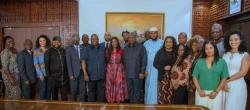
Beyond the dialogue, Mr. Osei also held partnership discussions with the University of Ghana as part of ECOSOCC’s university outreach programme. Meetings with the Directors of the Centre for Migration Studies and the Institute of African Studies explored potential areas of collaboration in research and policy engagement on migration and mobility.
Overall, the engagement served as a valuable platform for policy dialogue and knowledge exchange on free movement in West Africa, while strengthening collaboration between African Union institutions and academic partners.