
Africa is endowed with abundant water resources. This makes water one of Africa’s vital lifelines. However, over 400 million Africans still lack basic drinking water and more than 700 million are without safely managed sanitation. These challenges are exacerbated by various factors including structural deficits, weak governance frameworks, chronic underinvestment, and the accelerating impacts of climate change.
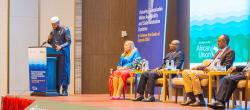
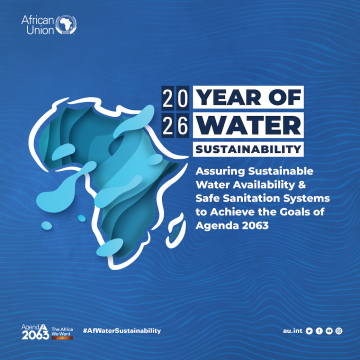
Consequently, the African Union ECOSOCC will, on February 9th convene its annual Pre-Summit on the AU Theme of the Year, on the margins of the 39th Ordinary Session of the Assembly of the African Union. This year, the Pre-Summit will promote solution-based dialogue to curb Water, Sanitation and Hygiene (WASH) challenges based on the 2026 African Union Theme of The Year, “Assuring Sustainable Water Availability and Safe Sanitation Systems to Achieve the Goals of Agenda 2063.”
Through the Pre-Summit, policymakers, civil society, and thought leaders will be shaping pathways toward Aspiration 1 of Agenda 2063, “A Prosperous Africa based on inclusive growth and sustainable development.”
The event will launch continental civil society engagement with the AU’s 2026 ToTY. It will provide a platform for unpacking the Theme's action framework, fostering multi-stakeholder dialogue, and co-developing strategies for effective implementation at community, national, and regional levels.
Challenges of WASH in Africa
Evidently, WASH in Africa continues to face challenges. Sanitation continues to lag in both funding and regulation. In 2025, the United Nations Children's Fund (UNICEF) and the World Health Organisation (WHO) found that only 43% of Africans have access to safely managed services. Moreover, the burden is disproportionately borne by women and girls. This is because they shoulder nearly 70% of water-related responsibilities.
For example, women and girls spend an estimated 40 billion hours annually fetching water, time that could otherwise fuel education, entrepreneurship, and leadership. This directly impedes Agenda 2063’s Aspiration 6 of building “An Africa whose development is people-driven, relying on the potential of African people, especially its women and youth and caring for children.”
Moreover, waterborne diseases remain among the leading killers of children under five, while agricultural productivity and industrial growth are constrained by unreliable water access and climate variability.
Climate change, on the other hand, continues to intensify vulnerabilities through recurrent floods and droughts. Moreover, fragmented approaches often neglect critical dimensions of gender equality, youth inclusion, disability, and broader social equity.
Opportunities for WASH in Africa
Africa continues the quest to achieve sustainable water availability and safe sanitation. This is through various commitments like the AU’s Agenda 2063 and the AfricaSan under the AU’s African Ministers’ Council on Water (AMCOW).
Further, solution-based platforms like the Pre-Summit also provide opportunities to facilitate solution-sharing dialogue, galvanize political will, and advance integrated, people‑centered solutions. Consequently, the 2026 Pre-Summit will be more than a gathering of voices. It will rather be a moment of convergence where clarity, collaboration and action will meet.
Why the Pre-Summit Matters
The Pre-Summit stands to be a decisive step toward safeguarding dignity, unlocking opportunity, and accelerating the continent’s transformation. Several opportunities will emerge from this dialogue. Each opportunity will carry the potential to shape Africa’s water future. They will also strengthen the continent’s collective resolve and here’s why:
1. A Shared Compass for 2026
The event will bring AU organs, member states, civil society, and development partners into one conversation to distill the Theme’s priorities into a common language. As such, participants will have in-depth discussions on thematic topics which will help them reach a consensus and align their goals on the theme. With shared goals, participants will have a shared compass that will ensure their solutions to WASH challenges are coordinated, purposeful, and moving in the same direction.
2. Building Bridges for Climate-Resilient Water Governance
It is no secret that water knows no borders. Hence, Africa’s solutions should not have borders either. Participants from diverse backgrounds in Africa and the diaspora will leverage the platform to strengthen coordination. When AU institutions, member states, RECs, utilities, and research bodies come together for dialogue, transboundary cooperation will be achieved, fostering governance that is inclusive, collaborative and gender and equality responsive. This will make resilience both technical and human centered.
3. Unlocking Partnerships and Innovation
This convening is also bound to forge new partnerships and innovative pathways for participants. Here, every conversation will be a seed for collaboration. Through new alliances, participants will have the opportunity to mobilise both financial and technical resources, while innovative, context-appropriate solutions gain traction. Additionally, civil society organisations will also have the opportunity to drive implementation, monitoring, and accountability of policies and decisions.
4. Aligning Africa’s Voice with Global Frameworks
Finally, the Pre-Summit creates space for coherence. By weaving the AU Theme of the Year 2026, the Africa Water Policy, Agenda 2063, and the UN 2026 Water Conference together, it reduces fragmentation and strengthens legal and policy frameworks. In doing so, it safeguards the fundamental right to water and sanitation, while positioning Africa as a unified voice on the global stage.
What Next?
The WASH crisis is a defining challenge that reverberates across every pillar of Africa’s transformation agenda. It strikes at the heart of the aspirations of Agenda 2063. As long as millions of Africans continue to face water scarcity, unsafe drinking water, and inadequate sanitation, progress in poverty eradication, food security, and infrastructure development will remain stalled.
The Pre-Summit is a timely event that is both a moment of reflection and launchpad for action. By embracing the philosophy of African ownership and African solutions, participants will be laying the foundation for coordinated responses that are both innovative and inclusive. The exchanges at the Pre-Summit will translate into commitments, partnerships, and practical steps that safeguard the right to water and sanitation for all. They will also form a clear pathway to align efforts with Agenda 2063, strengthen collaboration across institutions and communities, and ensure that solutions are not only shared but implemented.
By carrying forward the momentum of the Pre-Summit, participants will transform today’s challenges into tomorrow’s opportunities. This is the strategic step towards building an Africa that is integrated, peaceful, and prosperous, and where access to water and sanitation is no longer a privilege but a right.